Why Growing Businesses Need Process Automation
Learn why repeatable workflows become essential as teams, customers, and operational demands grow.
Key takeaways
What to remember
- Growth exposes processes that depend too heavily on individual memory.
- Automation creates repeatability without removing human judgment.
- Shared operational visibility improves decisions as activity increases.
01
Growth changes how work behaves
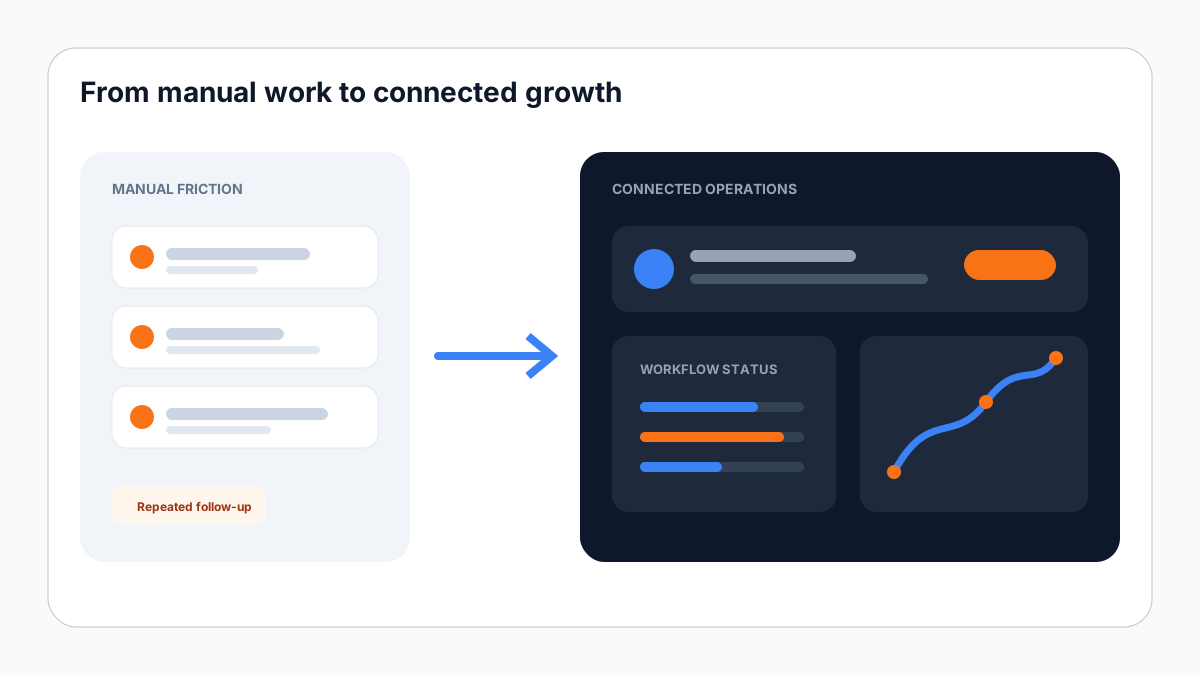
A process that works through conversation and memory can feel efficient when activity is limited. As the business grows, the same process becomes difficult to repeat and supervise.
The first signs are usually delayed approvals, repeated questions, inconsistent records, and leaders spending more time checking progress.
Implementation checklist
- Work depends on one experienced person
- Teams repeat the same status questions
- Approvals wait without clear ownership
- Reporting requires manual preparation
02
Choose the right process to automate
The strongest first automation project is frequent, predictable, and connected to a visible operational problem.
Avoid beginning with the largest process. A focused workflow creates faster learning and gives the team confidence before broader changes.
- 1List frequent repeatable tasks
- 2Measure delays and repeated effort
- 3Select one high-friction workflow
- 4Define a clear success measure
03
Build consistency and visibility
Triggers, approvals, notifications, and shared status views help teams complete repeatable work in a predictable way.
Automation also creates operational data. This gives decision-makers a clearer view of delays, workload, and improvement opportunities.
Implementation checklist
- Make ownership visible
- Automate routine reminders
- Keep exception handling flexible
- Review performance regularly
04
Practical next steps
Start with the process that generates the most repeated follow-up. Map it, simplify it, and automate only the parts that are predictable.
- 1Run a workflow audit
- 2Remove unnecessary steps
- 3Automate the repeatable path
- 4Review adoption and expand carefully
Related service
Business Process Automation
Turn repeatable tasks, approvals, handoffs, and reporting into clear automated workflows.
Continue reading
Related practical guides

How Institutions Can Automate Attendance Management
A practical guide to replacing repeated attendance entry with a connected review and reporting workflow.
Read practical guide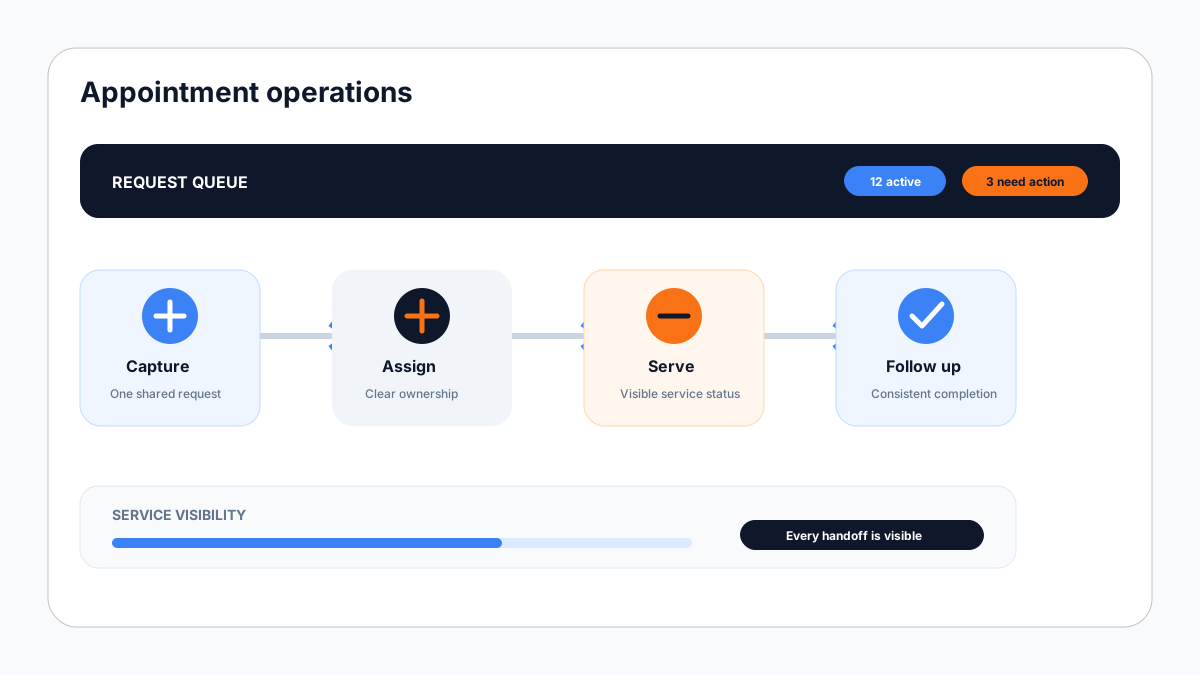
Common Workflow Problems in Appointment-Based Organizations
Understand where appointment workflows lose time and how structured automation improves coordination.
Read practical guide